

Trainings and Workshops : 2026-2027

National Workshop on “Human-Elephant Conflict – Varying Scenarios Across India” held on 12 August 2026 at Visakhapatnam, Andhra Pradesh
The National Workshop on “Human-Elephant Conflict - Varying Scenarios Across India” was organized by Project Elephant, Ministry of Environment, Forest and Climate Change (MoEFCC), Government of India, in collaboration with the Wildlife Institute of India (WII) and the Andhra Pradesh Forest Department, at Visakhapatnam, Andhra Pradesh, on 12-13 August 2026, on the occasion of World Elephant Day. The workshop brought together senior government officials, forest officers, scientists, researchers, conservation practitioners, railway officials and other stakeholders to deliberate on the diverse and emerging challenges of human-elephant conflict (HEC), share field experiences and strengthen coordinated approaches towards elephant conservation and human-elephant coexistence.
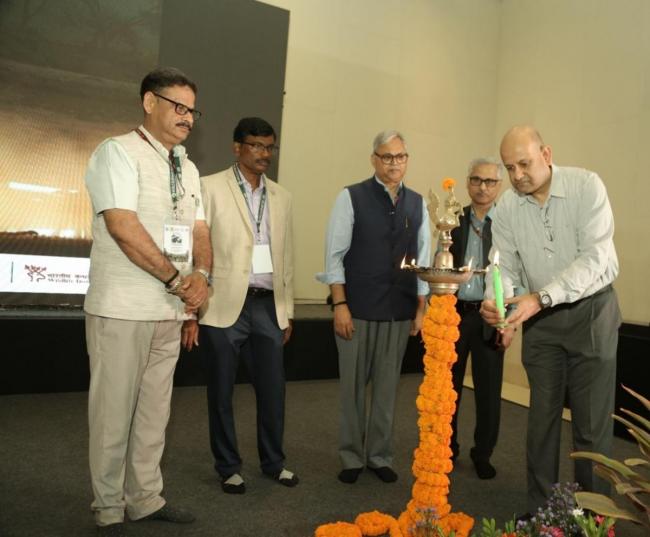
The programme commenced with an introductory note by Dr. Sadhana Yadav, Project Scientist II, Elephant Cell, Wildlife Institute of India, who welcomed the participants and outlined the objectives and structure of the workshop. The workshop was formally inaugurated by Shri Ramesh Kumar Pandey, IFS, Additional Director General of Forests (Wildlife), MoEFCC, Dr. Gobind Sagar Bhardwaj, IFS, Director, Wildlife Institute of India, Shri Sanjay Kumar, IFS, Additional Director General of Forests (Project Tiger) and Member Secretary, NTCA, Dr. Vaibhav C. Mathur, Inspector General of Forests (Project Tiger & Elephant) and Dr. P. V. Chalapathi Rao, PCCF (WL) & CWLW, Government of Andhra Pradesh.
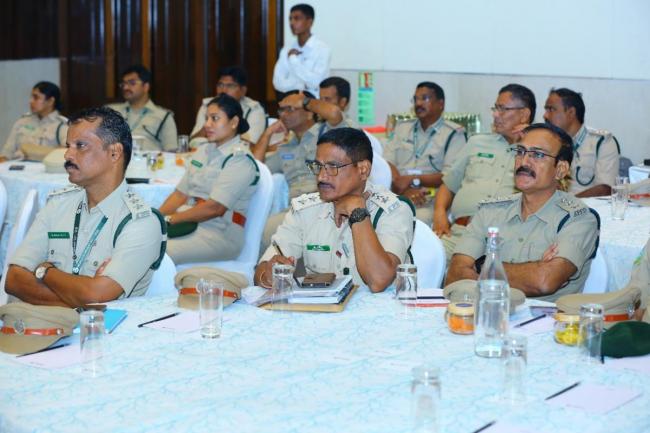
The technical programme comprised 18 presentations covering various dimensions of human-elephant conflict, including mitigation practices, veterinary and capture management, Elephant Conservation Planning, habitat and corridor conservation, community-based mitigation, technology-enabled early-warning systems, railway and electricity-related elephant mortality, legal and policy aspects, and field-based mitigation experiences from different elephant-range states.
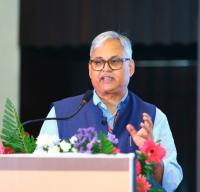
Shri Ramesh Kumar Pandey, IFS, ADGF (WL), MoEFCC, presented an overview of national HEC trends, patterns and emerging challenges. He highlighted the increasing human fatalities associated with HEC and persistent unnatural elephant mortality due to electrocution, railway accidents, poaching, poisoning and other anthropogenic causes. He emphasized the need for improved population monitoring, habitat and corridor management, context-specific mitigation measures, technology-based early-warning systems, strengthened Rapid Response Teams and reliable HEC data management.

Dr. Bilal Habib, Scientist F, Wildlife Institute of India, presented findings on long-term HEC incidents in West Bengal, Odisha, Kerala, Tamil Nadu and Karnataka, focusing on village-level conflict databases, assessment of the current status of HEC, identification of vulnerable villages and development of appropriate mitigation measures. The presentation highlighted the importance of understanding long-term spatial and temporal patterns of conflict for developing targeted and evidence-based interventions.
The technical sessions further demonstrated that HEC varies considerably across landscapes and is influenced by habitat fragmentation, loss of connectivity, agricultural expansion, plantations, mining, linear infrastructure, developmental activities and changing land-use patterns. Participants emphasized the need for conflict management approaches that are responsive to local ecological and socio-economic conditions and supported by landscape-level planning and adaptive management.
A major focus of the workshop was the role of Elephant Conservation Plans (ECPs) as integrated landscape-level frameworks for habitat and corridor conservation, HEC mitigation, stakeholder coordination, research, capacity building and sustainable financing. The need for stronger legal protection of elephant corridors, improved inter-departmental and interstate coordination, and integration of elephant conservation considerations into infrastructure and development planning was also emphasized.
The workshop highlighted the potential of technology-enabled early-warning and rapid response systems, including AI-based surveillance, satellite and VHF telemetry, thermal drones, mobile applications, real-time alert systems and railway intrusion detection systems. Community participation was recognized as a key component of sustainable HEC mitigation, with emphasis on locally appropriate deterrents, community-based monitoring, awareness programmes, timely compensation and livelihood support.
The deliberations also underscored the need for standardized HEC data collection, improved mortality investigation, predictable and timely compensation, strengthened Rapid Response Teams and specialized veterinary capacity for rescue, immobilization and translocation. Translocation was recognized as a case-specific intervention requiring scientific assessment, suitable habitat and post-release monitoring, rather than being treated as a standalone solution.
The workshop concluded with a vote of thanks by Dr. Parag Nigam, who acknowledged the support and contributions of MoEFCC, WII, the Andhra Pradesh Forest Department, participating Chief Wildlife Wardens, presenters, field practitioners, researchers and other stakeholders.
Overall, the workshop highlighted that human-elephant conflict is context-specific and requires landscape-level and adaptive management focused on conflict hotspots, critical habitats and elephant corridors. Elephant Conservation Plans, technology-enabled early-warning systems, community participation, timely compensation, standardized HEC data, strengthened Rapid Response Teams and veterinary capacity were identified as important components of effective conflict mitigation. The workshop emphasized integrated planning, habitat connectivity, evidence-based mitigation, technological innovation and coordinated institutional and community action for achieving sustainable human-elephant coexistence.