
Trainings and Workshops : 2024-2025

Capacity Building Workshop on Enhancing Elephant Welfare in Captivity for Elephant Custodians and Handlers
Venue: Guwahati, Assam
Date: 21-22 January 2025
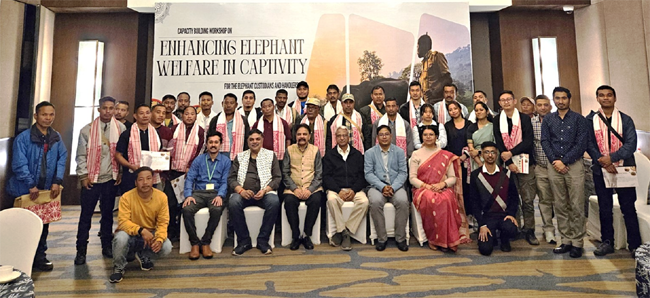
A two-day Capacity Building Workshop on “Enhancing Elephant Welfare in Captivity” was organized on 21–22 January 2025 in Guwahati, Assam. The workshop was jointly conducted by Project Elephant under the Ministry of Environment, Forest and Climate Change (MoEFCC), Government of India, the Wildlife Institute of India (WII), and the Assam Forest Department.
T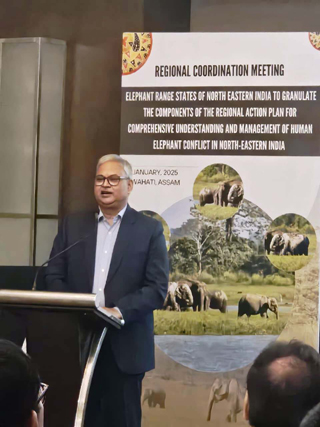 he programme was designed to strengthen the knowledge base and technical capacity of elephant custodians, mahouts, veterinarians, and field personnel involved in the management of captive elephants, particularly in the North-Eastern region of India. A total of 33 participants representing Assam, Arunachal Pradesh, Meghalaya, Tripura, Manipur, Nagaland, and Mizoram took part in the workshop.
India is home to approximately 2,700 captive elephants, which play an important role in forest management, conservation interventions, rescue operations, and human-elephant conflict mitigation. However, challenges such as declining traditional knowledge among mahouts, limited institutional capacity, and variations in management practices necessitate structured training initiatives. This workshop addressed these gaps by providing a platform for knowledge exchange and skill enhancement.
The workshop featured a series of technical sessions delivered by experts from government institutions, academic organizations, and conservation groups. Key themes included:
- Policy directives, regulatory frameworks, and recent initiatives for captive elephant management
- Elephant biology, behavior, health care, and welfare
- Veterinary care, including treatment of injuries, foot health, and surgical interventions
- Reproductive biology, pregnancy monitoring, neonatal care, and management of rescued calves
- Housing, camp management, hygiene, and environmental considerations
- Nutritional requirements and region-specific diet planning
- Safe handling practices, including management of bull elephants during musth
- Importance of proper gear fitting to prevent injuries and ensure comfort
Special emphasis was placed on preventive healthcare, early diagnosis of health issues, and strengthening the bond between mahouts and elephants as a key factor in ensuring animal welfare.
The workshop also included sessions on the legal framework governing captive elephants, with discussions on compliance under the Wildlife (Protection) Act, 1972, and other relevant animal welfare regulations. Additionally, the role of trained captive elephants, particularly ‘koonki’ elephants, in forest operations and human-elephant conflict mitigation was highlighted.
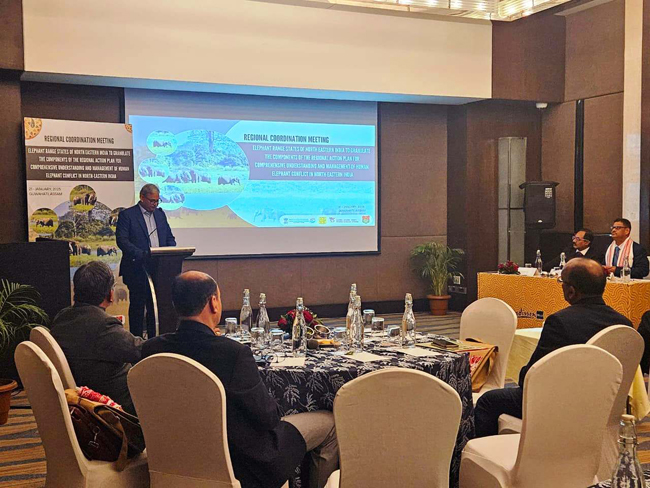
The event was held alongside a meeting of Elephant Range States of North-East India, aimed at strengthening regional coordination and advancing the Regional Action Plan for managing human-elephant conflict in the region.
The workshop concluded with a valedictory session, during which participants shared their feedback and appreciated the opportunity to interact with experts and gain practical insights. Overall, the programme served as an important step toward enhancing capacity, standardizing management practices, and improving the welfare of captive elephants in the North-Eastern region of India.
Workshop on Minimizing the Impact of Railways on Elephants and Other Wildlife
Venue: Wildlife Institute of India
Date: 20–23 November 2024
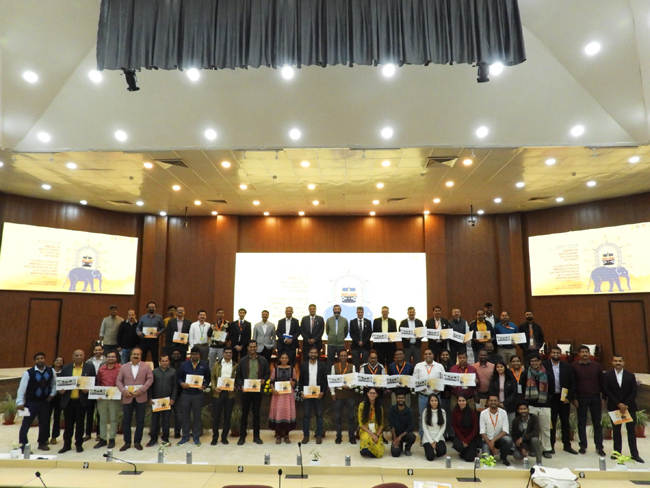
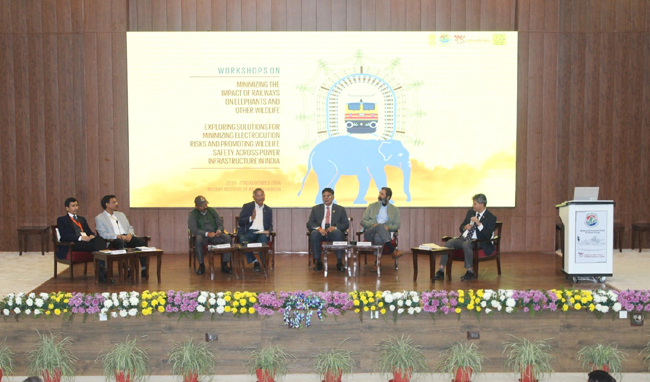
A national workshop on “Minimizing the Impact of Railways on Elephants and Other Wildlife” was organized by the Project Elephant Division, Ministry of Environment, Forest and Climate Change in collaboration with the Elephant Cell of the Wildlife Institute of India. The programme aimed to strengthen the capacity of Indian Railways officials to understand ecological impacts of railway infrastructure and adopt effective mitigation strategies to reduce wildlife mortality, particularly elephant deaths due to train collisions.
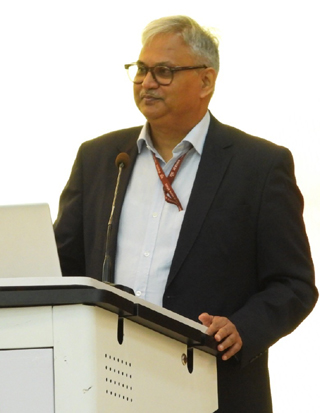 The inaugural session featured addresses by Dr. Bilal Habib, Dr. Parag Nigam, Shri Virendra Tiwari, and Shri Ramesh Kumar Pandey. They emphasized integrating ecological considerations into infrastructure planning, strengthening institutional coordination, and adopting wildlife-friendly engineering solutions such as crossings, early warning systems, and speed regulation.
The technical sessions brought together experts from conservation, policy, and technology domains. Dr. Ramesh Kumar Pandey discussed policy challenges and the need for integrating ecological safeguards at the planning stage. Dr. Bivash Pandav highlighted India’s biodiversity richness and vulnerability to infrastructure expansion. Dr. Lakshminarayanan N. explained elephant behavior and movement patterns relevant to mitigation planning.
Dr. Bilal Habib introduced transportation ecology and emphasized identifying critical crossing points and improving track design. Dr. Gopi G. V. presented case studies including canopy bridges in Assam. Dr. Saket Badola shared field experiences from Rajaji National Park, demonstrating the effectiveness of speed regulation, patrolling, and early warning systems.
Dr. Anil Kumar Singh discussed drivers of elephant mortality and mitigation approaches, while Ms. Meenakshi Singh highlighted optical fiber-based sensing systems for real-time wildlife detection. Dr. S. P. Goyal presented global best practices. Dr. V. Naganathan discussed the use of AI, drones, and coordinated monitoring, and Dr. V. B. Mathur emphasized ecological impact assessments and biodiversity planning. Dr. Akansha Saxena highlighted ecosystem-level impacts and the need for species-specific mitigation.
A panel discussion moderated by Dr. Bilal Habib included Shri S. K. Verma, Dr. V. B. Mathur, Dr. V. Naganathan, Dr. Parag Nigam, and Shri Praveen Bhargav. The discussion focused on enhancing inter-agency collaboration, strengthening data systems, and scaling up technological interventions to reduce wildlife-railway conflicts.
The workshop also included a field visit to Rajaji National Park, where participants observed railway infrastructure in wildlife habitats and on-ground mitigation measures.
Overall, the workshop provided a valuable platform for knowledge exchange among railway officials, scientists, and conservation practitioners, highlighting science-based and technology-driven approaches to minimize rail-wildlife conflicts and promote sustainable, biodiversity-friendly infrastructure development in India.
Capacity Building Workshop on “Enhancing Elephant Welfare in Captivity” for Elephant Custodians and Handlers
Venue: Coimbatore, Tamil Nadu
Date: 5 - 6 September 2024
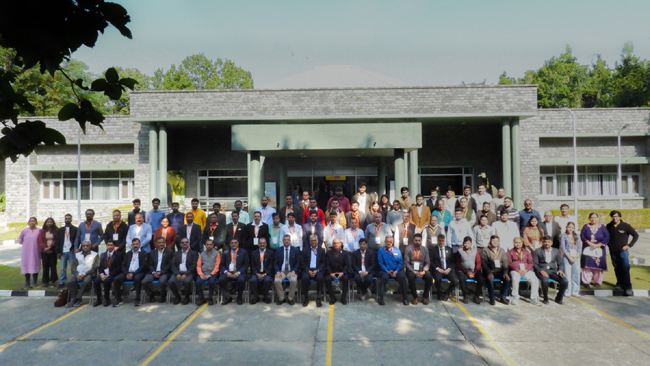
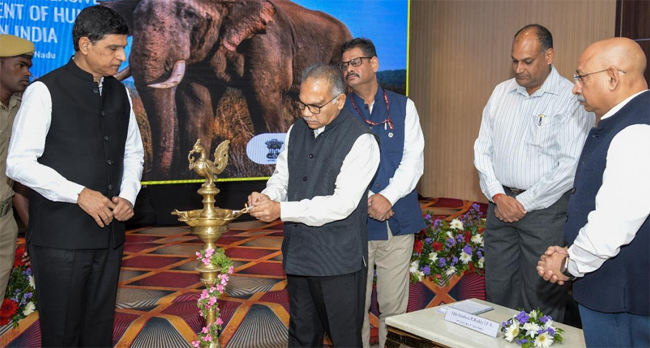
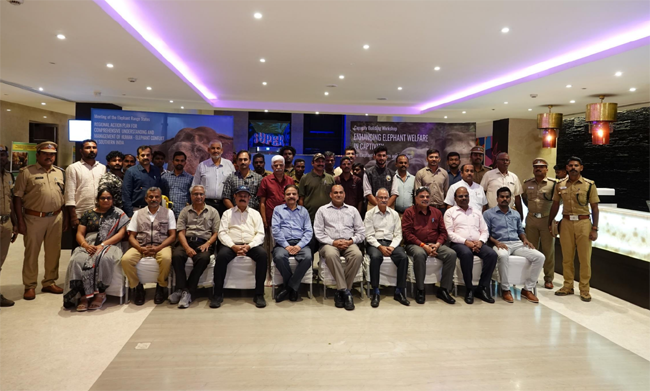
A two-day Capacity Building Workshop on “Enhancing Elephant Welfare in Captivity” was organized on 5–6 September 2024 in Coimbatore. The programme was jointly conducted by Project Elephant under the Ministry of Environment, Forest and Climate Change, in collaboration with the Wildlife Institute of India and the Tamil Nadu Forest Department. It aimed to enhance the knowledge and practical skills of elephant custodians and mahouts involved in the management of captive elephants.
India has over 2,700 captive elephants maintained across forest camps, temples, zoos, and rescue centers. Under the Wildlife (Protection) Act, 1972, they hold the same legal status as wild elephants, making their welfare a key priority. Despite their important role in forest management and human–elephant conflict mitigation, challenges such as limited infrastructure, insufficient training, and declining traditional knowledge highlight the need for structured capacity-building efforts.
The workshop brought together 39 participants from Tamil Nadu, Kerala, Karnataka, and Andhra Pradesh, including forest personnel, temple representatives, and private elephant owners. The inaugural session was attended by senior officials and experts, and emphasized the cultural significance of elephants in India and the importance of integrating traditional knowledge with modern scientific approaches.
The technical sessions were delivered by distinguished experts including Dr. Parag Nigam, who discussed elephant biology and health indicators; Dr. N. Lakshminarayanan, who spoke on behavioral ecology; and Dr. Sanjay K. Srivastava, who explained legal frameworks governing captive elephant management.
Further sessions were conducted by Shri Baiju Raj M. V. on welfare-oriented management and enrichment practices, Dr. N. S. Manoharan on nutrition and reproductive health, and Dr. Rajesh Kumar on veterinary care and treatment practices. Specialized sessions were also delivered by Dr. K. K. Sarma on foot care, tusk management, and musth, and by Dr. A. B. Srivastava on proper use and maintenance of elephant gear.
Key topics covered included elephant behavior, nutrition, preventive healthcare, legal compliance, enclosure enrichment, and management practices that promote natural behavior and overall well-being. Emphasis was placed on combining traditional mahout knowledge with modern veterinary and scientific techniques.
The workshop concluded with a valedictory session where participants expressed positive feedback, noting improved understanding and practical skills. Overall, the programme served as an important platform for capacity building, knowledge exchange, and strengthening best practices, reinforcing the commitment to improving the welfare and management of captive elephants across India.
Workshop on “Wildlife Conservation & Management” for the Officials & Frontline Staff of Jharkhand Forest Department
Venue: Wildlife Institute of India, Dehradun
Date: 1-14 July 2024
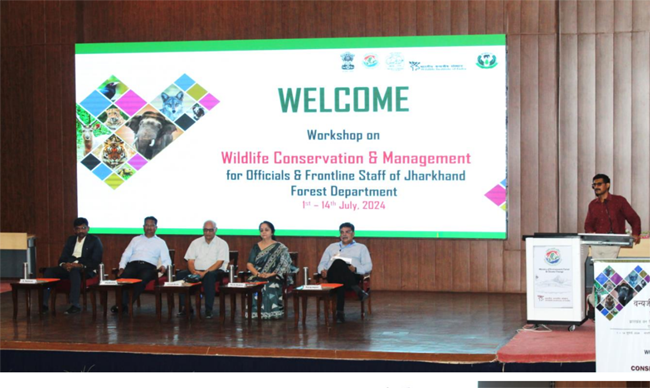
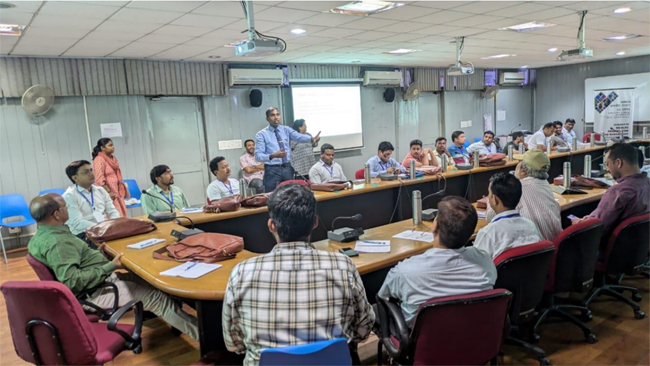
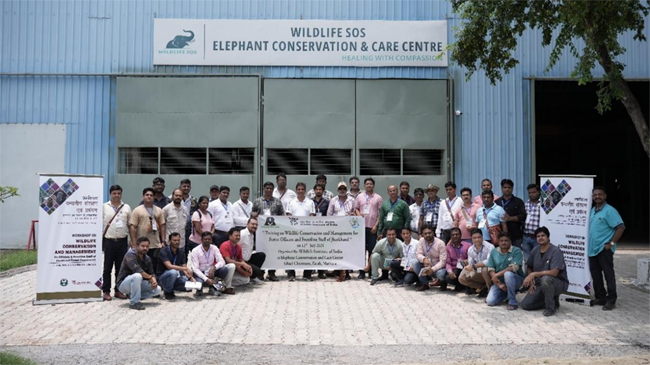
The Wildlife Institute of India (WII) organized a two-week training programme on “Wildlife Conservation & Management” for 31 officials and frontline staff of the Jharkhand Forest Department. Coordinated by Dr. Parag Nigam and Dr. Ramesh C., the programme aimed to strengthen scientific knowledge, technical skills, and field preparedness to address key conservation challenges such as human-wildlife conflict, habitat degradation, wildlife health, and biodiversity monitoring.
The inaugural session was addressed by Dr. Lakshminarayanan N., Dr. Parag Nigam, Dr. S. Sathyakumar, and Dr. Ruchi Badola, with the inaugural address delivered by Shri Vinod Rishi, IFS, who shared valuable field experiences and insights on wildlife conservation practices.
The training programme included a series of expert lectures and practical sessions delivered by distinguished resource persons including Dr. Bivash Pandav, Dr. Gowri Mallapur, Dr. K. Ramesh, Shri Neeraj Sharma, IFS, Sh. J. S. Chauhan, Dr. A. B. Shrivastav, Dr. Sandeep Gupta, Dr. Sivabala S., IFS, Dr. Gautam Talukdar, Dr. Abhijit Das, and Dr. Anil Bharadwaj, among others. Key thematic areas covered wildlife ecology and behaviour, population estimation techniques, human-wildlife conflict mitigation, rescue and rehabilitation, wildlife health and forensics, ex-situ conservation, legal frameworks, and the application of modern tools such as GIS, remote sensing, and MSTrIPES.
Participants gained hands-on experience in wildlife handling, snake identification, chemical immobilization, first aid, and emergency response. Field visits to prominent institutions and conservation sites including the Forest Research Institute, Dehradun Zoo, Chilla Elephant Camp, Asan Barrage Conservation Reserve, Soor Sarovar Bird Sanctuary, and Keoladeo National Park provided valuable on-ground exposure to conservation practices and management challenges.
The programme concluded with a valedictory session where Dr. Parag Nigam appreciated the active participation of trainees and encouraged them to apply their learning in the field, while Dr. Ramesh C. delivered the vote of thanks.
Overall, the training programme successfully integrated ecological theory, practical skills, and field-based learning, significantly enhancing the capacity of Jharkhand Forest Department personnel and reinforcing the importance of scientific, community-based, and interdisciplinary approaches in wildlife conservation.
Last Updated: March 18, 2026