
Trainings and Workshops : 2025-2026

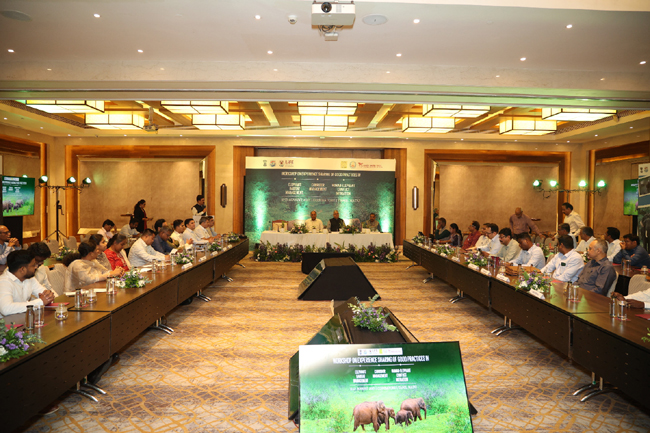
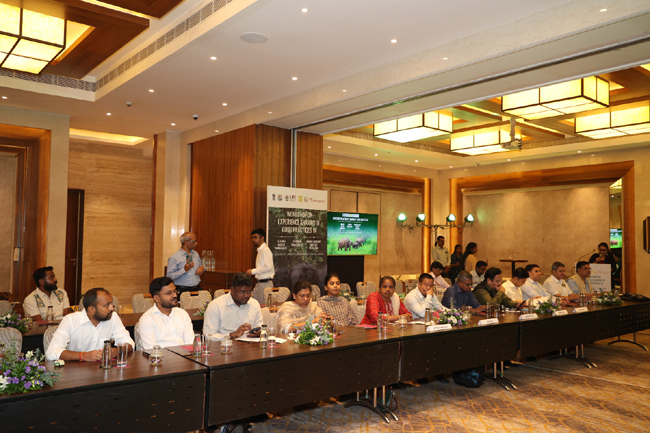
Empowering Communities: Strategies for Human–Elephant Coexistence and Support for Conflict-Affected Victims,” held on 9 February 2026 at Guwahati, Assam.
The workshop was organized by the Assam Forest Department under the aegis of Project Elephant, Ministry of Environment, Forest and Climate Change (MoEF&CC), Government of India, in collaboration with the Wildlife Institute of India. The one-day workshop was held at Ratnamouli Palace, Guwahati on 09 February 2026 and brought together 28 participants from seven states—Assam, Arunachal Pradesh, Meghalaya, Nagaland, Tripura, Chhattisgarh, and Odisha.
The workshop underscored the increasing challenges posed by human–elephant conflict (HEC) across India. The programme aimed to promote coexistence strategies, strengthen mitigation frameworks, encourage community empowerment, and enhance institutional support for conflict-affected victims with national policy directives.
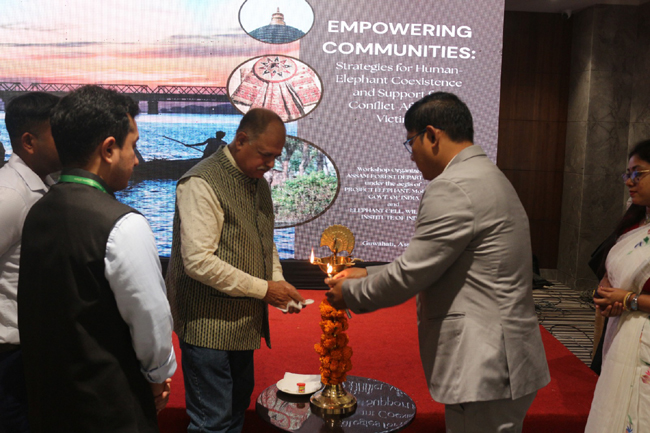
The programme commenced with an introductory note and Saraswati Vandana by Dr. Sadhana Yadav, Project Scientist II, Elephant Cell, WII. The ceremonial lighting of the lamp was conducted by distinguished dignitaries. Shri Rohini Ballave Saikia, IFS, DCF, Assam, delivered the welcome address, emphasizing the significance of the workshop in addressing human–elephant conflict (HEC).
Dr. Parag Nigam, Nodal Officer, Elephant Cell, Wildlife Institute of India, highlighted the need to promote sustainable human–elephant coexistence, especially in communities near protected areas.
Shri V. Clement Ben, IG (PT&E), Ministry of Environment, Forest and Climate Change, highlighted the progress of the Regional Action Plan and stressed identifying conflict hotspots and strengthening trained Rapid Response Teams.
Shri Ramesh Pandey, ADGF (WL), emphasized rising human–elephant conflict across major range states and called for landscape-level planning, corridor restoration, early warning systems, community-based mitigation, and stronger compensation mechanisms.
The technical sessions began with Dr. K. K. Sarma, Director of PG Studies and Professor & Head, Surgery & Radiology, College of Veterinary Science, AVFU, Guwahati, he emphasized behavioural understanding as a cost-effective strategy for mitigating Human-Elephant Conflict (HEC), noting that habitat fragmentation and corridor disruption have intensified interactions. He highlighted key herd dynamics and behavioural traits such as matriarchal leadership, musth-related aggression, strong sensory abilities, crop preferences, and observable signs of presence and advised field personnel to maintain caution, situational awareness, and strict adherence to safety protocols, particularly along known movement corridors.
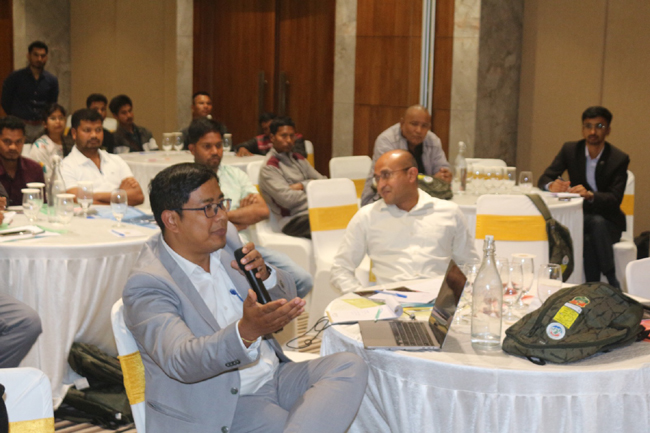
Dr. Bibhuti Prasad Lahkar, Head, Conservation & Livelihood Division (CLD) & Elephant Research and Conservation Division (ERCD), Aaranyak, Assam, began with a documentary overview of Asian elephants, highlighting their ecological significance and behavioural traits, and situating the discussion within the growing challenge of Human-Elephant Conflict (HEC). He described HEC as a multi-dimensional issue driven by habitat shrinkage, expanding human activities, high-attraction crops, water scarcity, and social disruption within herds. Drawing on experiences from Assam, he presented mitigation measures such as bio-fencing, community-based early warning systems, alternative crops, stakeholder training, and habitat improvement, emphasizing that collaborative, community-led approaches are essential for sustainable coexistence.
Shri Hiten K. Baishya, Deputy Director, Elephant Research and Conservation Division (ERCD), Aaranyak, Assam, outlined various physical barriers for mitigating Human-Elephant Conflict (HEC), including trenches and different fencing models, emphasizing site-specific selection. He highlighted solar fencing as an effective non-lethal option when properly installed and maintained, stressing strong community involvement. He also identified common causes of failure and underscored the need for regular maintenance, capacity building, and shared responsibility for long-term success.
Shri Tejas Mariswamy, IFS, Divisional Forest Officer, Goalpara Division, Assam, highlighted Assam Government’s multidimensional strategy to manage HEC, focusing on habitat restoration, corridor protection, eviction of encroachments, elephant-specific plantations, wetland restoration, science-based tools such as radio-collaring and hotspot mapping, compensation reforms, and convergence with crop insurance and welfare schemes.
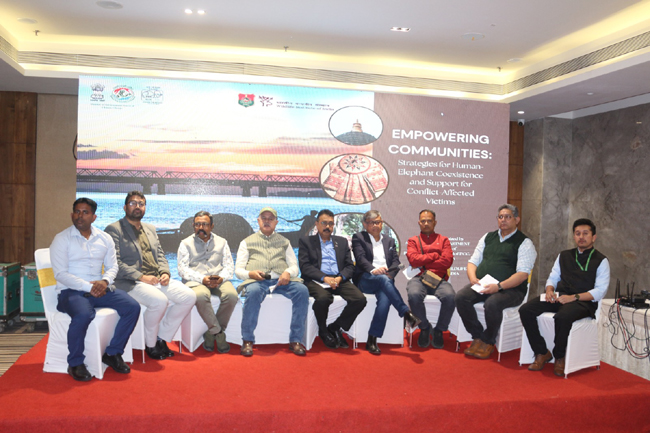
The panel discussion brought together experts from government bodies, research institutions, and conservation organizations in an interactive session with workshop participants. It enabled a structured and constructive exchange on state-specific challenges, field experiences, and policy recommendations. The deliberations focused on critical issues including the adequacy and timely disbursal of compensation, the need for greater inter-state parity in relief frameworks, habitat fragmentation and monoculture expansion affecting elephant movement, development of fodder resources to divert elephants from crop fields, and strengthening community infrastructure to enhance resilience in conflict-prone areas.
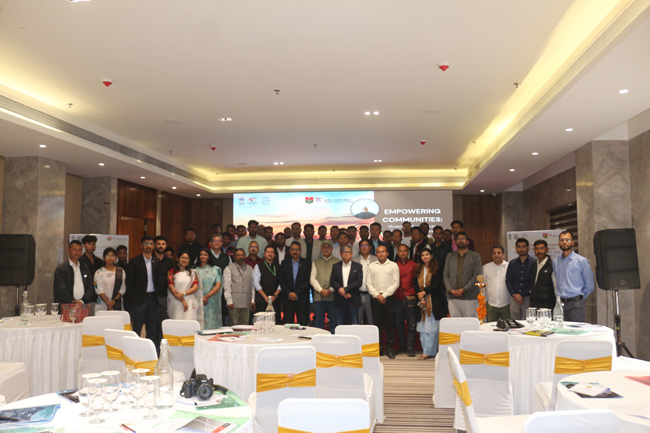
Key outcomes of the workshop highlighted the need for structured inter-state coordination to address Human-Elephant Conflict (HEC), along with stronger welfare support for frontline forest staff. Participants emphasized standardized, time-bound compensation, data-driven proposals, and faster relief mechanisms. The importance of science-based habitat restoration and coordinated management of fragmented corridors in the Northeast was underscored. Integration of mitigation measures into APOs and strengthening RAP implementation were recommended. Community-based practices, improved grain storage, and enhanced training and safety support for frontline workers were also stressed.
The workshop concluded with felicitation of the panellists by Shri Rohini Ballave Saikia and a vote of thanks by Dr. Aju Mathew George. The deliberations reflected a collective commitment to coordinated, science-driven, and community-centred strategies to ensure sustainable human–elephant coexistence across India.
Workshop on “Good Practices in Elephant Habitat Management, Corridor Management, and Human–Elephant Conflict Mitigation”
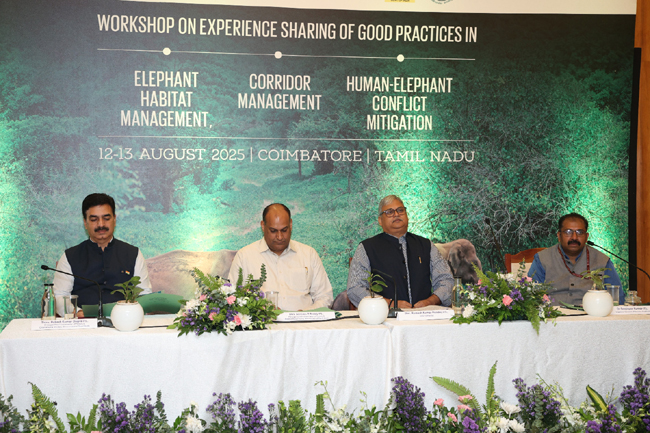
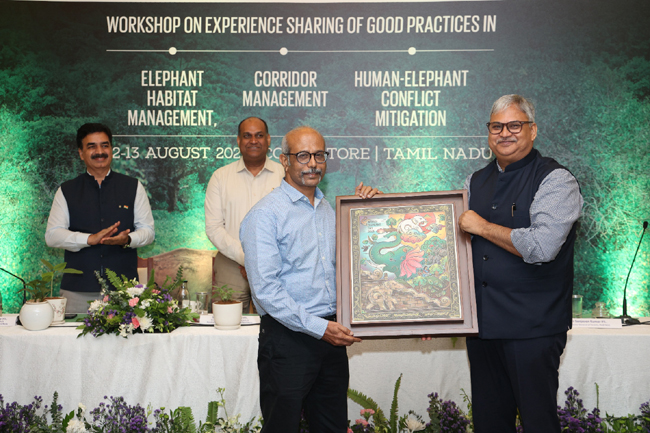
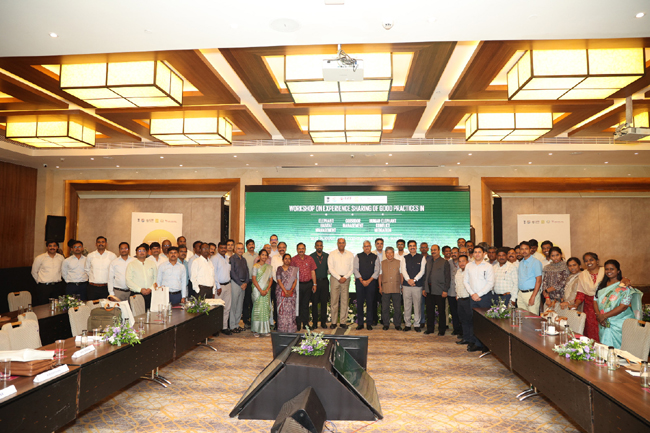
The Ministry of Environment, Forest and Climate Change (MoEF&CC) along with technical support of Tamil Nadu Forest Department and Elephant Cell at Wildlife Institute of India, organized a two-day national workshop on “Good Practices in Elephant Habitat Management, Corridor Management, and Human–Elephant Conflict Mitigation” on 12–13 August 2025 at Coimbatore, Tamil Nadu. The workshop served as a national platform for elephant-range States to share successful experiences, innovative models, and best practices for conserving India’s National Heritage Animal, the Asian elephant, under Project Elephant.
The workshop was inaugurated by senior officials from MoEF&CC and the Tamil Nadu Forest Department, who emphasized the importance of collective learning, adaptive management, and technology integration for improving elephant conservation outcomes. Participants from 14 elephant-range States presented diverse strategies encompassing habitat improvement, corridor restoration, human–elephant conflict (HEC) mitigation, and welfare of captive elephants. Tamil Nadu showcased pioneering initiatives such as the Elephant Death Audit Framework (EDAF), AI-based railway track monitoring systems, and the community-based Thadam network for real-time conflict alerts. Karnataka presented its model of integrated conflict mitigation through extensive rail barricades, solar fencing, and the “E-Parihara” digital compensation platform, ensuring timely relief to affected communities.
Chhattisgarh highlighted its multi-pronged approach involving Hathi Mitra Dal community teams, AI-based early warning applications like Sajag and Gaj Sanket, and drone surveillance for tracking elephant herds. Assam demonstrated its large-scale habitat restoration efforts, radio-telemetry tracking, and the Gaja Mitra initiative for conflict-prone districts. Odisha shared the success of its Anukampa portal for rapid compensation and the Gajasathi volunteer network supporting coexistence in rural areas. Other States such as Kerala, Madhya Pradesh, West Bengal, and Haryana presented state-specific strategies including AI-assisted railway safety systems, corridor mapping, rapid response mechanisms, and rehabilitation efforts for displaced elephants.
Experts from WII presented analytical findings on long-term patterns of human–elephant conflict across eastern and northeastern India, identifying key hotspots, drivers of mortality, and policy implications. The deliberations also covered progress on drafting the Regional Action Plans (RAPs) for Southern and North-Eastern regions, which aim to integrate scientific research, community engagement, and landscape-level management for sustainable coexistence.
The workshop concluded with a strong consensus among participating States and MoEF&CC to strengthen inter-State coordination, adopt standardized monitoring frameworks, and scale up successful models that combine technology, science, and local participation. The collective outcomes reaffirmed India’s commitment to safeguarding elephants and their habitats through evidence-based conservation, policy integration, and community stewardship.
Last Updated: March 5, 2026