
Evaluation of the Alignment of the Proposed Mumbai Pune Expressway

|
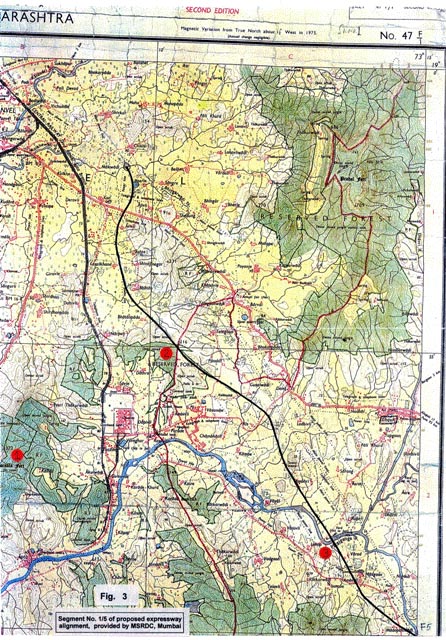
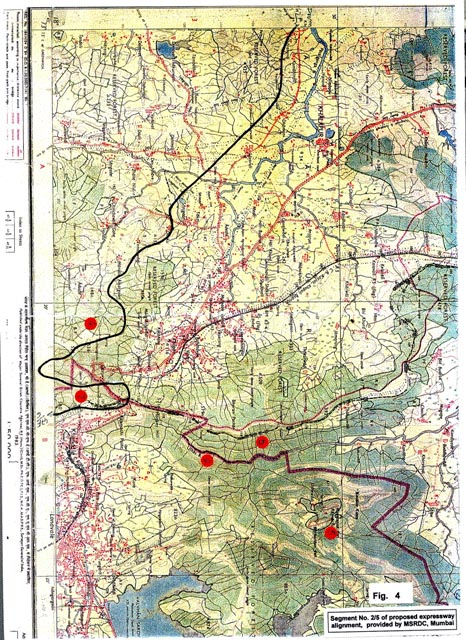
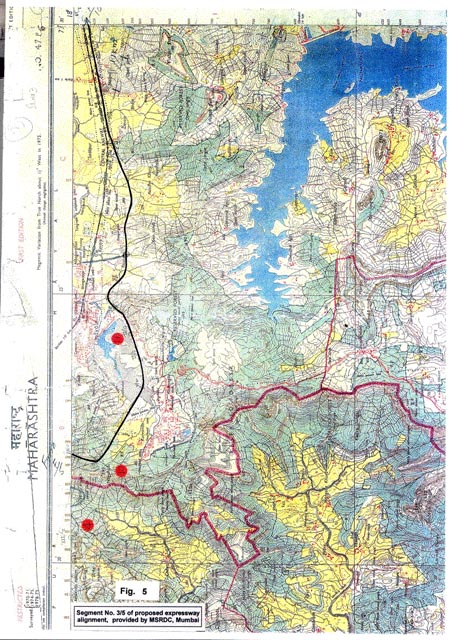
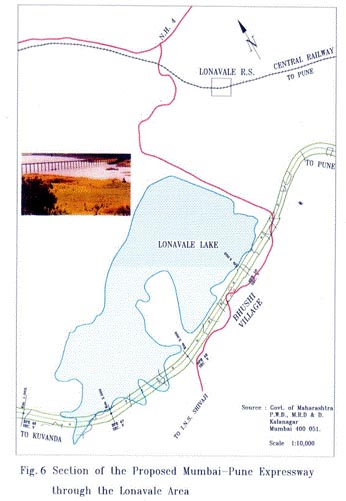
Information on valued ecological areas, habitats and wildlife conservation areas that fall within the bounds of developmental projects is the most important prerequisite for ecological impact assessments. Although there exists no shortcuts for acquisition of ecological data that provides the environmental baseline of the project site, reconnaissance surveys provide the ability to scope down the areas that require detailed examination during subsequent surveys. A reconnaissance was undertaken along the proposed Mumbai - Pune Expressway Alignment. Representatives of the Maharashtra State Public Works Department, Maharashtra State Road Development Corporation, Maharashtra State Forest Department and NGOs accompanied the WII Team. The proposed expressway alignment can be divided into five sections (on the basis of the depiction of expressway alignment by MSRDC officials on five sections of topographical sheets). The entire expressway alignment falls under 4 toposheets on 1:50,000 scale (Nos. 47 F/1, 47 F/5, 47 F/6, 47 F/10). A rapid assessment of the features of ecological values, viz., forests, protected areas, valleys, rivers and water bodies along the expressway alignment was made during the reconnaissance and the observations are discussed below. Section 1/5 - Sheet No. 47 F/1 (Fig. 3). Three specific areas that can be designated as sites of ecological value in Section 1/5 of the proposed alignment are Karnala Bird Sanctuary (1), Reserved Forest Patch and (2) Patalganga River (3). The Karnala Bird Sanctuary (4.48 km2) has been aptly described as an "Oasis" in the industrialised environment. Nestled in a valley, it harbours about 180 bird species including winter migrants. Karnala is amongst the few bird sanctuaries in India which provide protection to woodland birds. The forest patches, though small and fragmented, adjoining the Karnala Bird Sanctuary have an ecologically important buffering function. The expressway alignment also crosses the Patalganga River in this section. Patalganga forms a part of catchment of the Bhima River. Patalganga, at the point of expressway crossing does not remain perennial. The upper tributaries of Krishna and Bhima rivers are a source of water in the area. Canal systems and channels have created seepage lagoons and marsh lands in some area, some of which have developed into small tanks and reservoirs, supporting aquatic life. Section 2/5 - Sheet No 47 F/5 (Fig. 4). The ecological areas of interest are (i) Valleys - Amba(4), Rajmachi(5), Ulhas(6) and Santapau(7); (ii) Rivers - Amba(8) and Ulhas(9) and (iii) the proposed Father Santapau Sanctuary (Rodgers & Panwar, 1988). The valley system has great significance in the Western Ghat landscape. The valleys are well wooded and harbour the rich endemic floristic and faunal diversity, characteristic of the Western Ghats. Valley slopes are largely undisturbed mainly because of their inaccessibility while the valley bottoms have human settlements. The plateaus support limited tree growth on account of shallow soil depth and are largely dominated by grass and herbaceous flora. Few patches of remnant Semi Evergreen and Evergreen Forests occur along the elevated ravines and crestlines. These patches support diverse floral and faunal groups many of which are endemic and endangered. The conservation significance of the Borghat area have already been discussed in detail in the preceding section (4.1). The forests of Borghat area form the catchment of Ulhas and Amba rivers. These rivers along with their tributaries and streams form vital components of herpetofaunal habitat. Section 3/5 - Sheet No. 47 F/6 (Fig. 5). In this section lie the Reserved Forests patches (10) which form the watershed of Amba river. Presently, the expressway alignment in this section passes through the Lonavale lake bed (Fig. 6) Lonavale lake (11) is a major water source for the human and livestock population in the area. Land clearing and earth moving activities during the construction phase of the project are expected to disturb this water body. Greater runoff from exposed soil surfaces can increase turbidity in the lake water. This may affect temporarily or permanently the quality of drinking water supplied to the neighbouring township and also of the water utilised by the species dependent on this aquatic ecosystem.
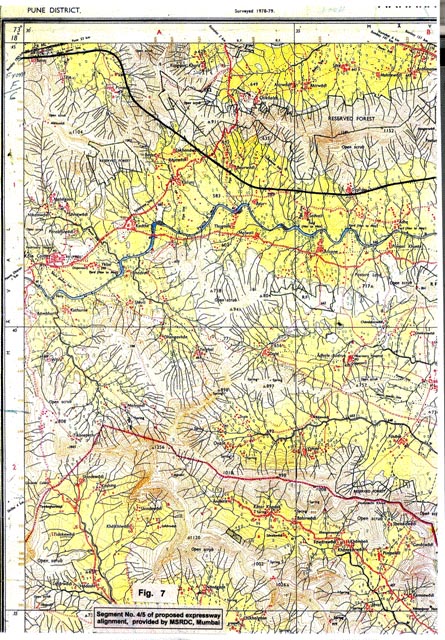
Section 4/5 - Sheet No. 47 F/10 (Fig. 7). In this section the expressway alignment passes mainly through the agricultural areas. Although no ecological values are likely to be affected the alignment may have socio-economic and human dimension implications on account of land acquisition and change in landuse practices.
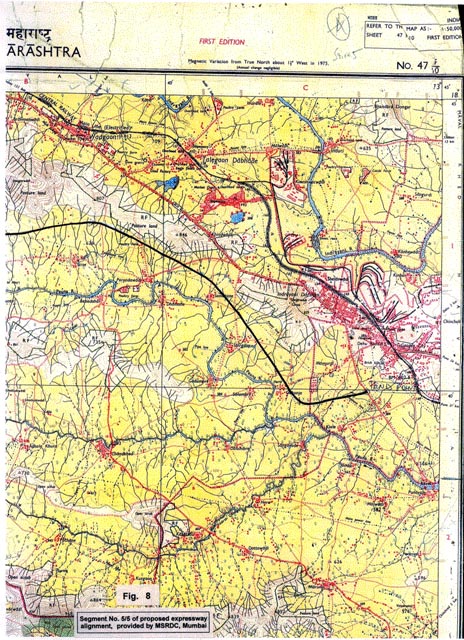
Section 5/5 - Sheet No. 47 F/10 (Fig. 8). In this section the expressway alignment passes mainly through the agricultural areas. Although no ecological values are likely to be affected the alignment may have socio-economic and human dimension implications on account of land acquisition and change in landuse practices.
|
Last Updated: October 9, 2015